LA FRASE DE LA SEMANA IN ELEMENTARY SPANISH

LA FRASE DE LA SEMANA IN ELEMENTARY SPANISH

“La frase de la semana” or phrase of the week is a great opportunity to teach useful language. I try to use phrases that I know we can incorporate into our classes. I teach grades K-5, but I only use it with my students in grades 3-5.

We make it part of our routine. I keep a poster with the phrase of the week taped on the door.  I sometimes teach classes back to back, and having this routine can buy me an extra minute while I am getting everything ready for the next class. My students wait for me in a line outside my class.

La frase de la semana serves as their password to enter the classroom. It takes about two minutes on average, so children know that they need to find their place quietly in the room and read the “Plan de la clase” to find out what we will be doing (although there are days when this goes more smoothly than other days). I don’t have a variety of classroom jobs because I find the logistics hard for me, but I do have a “secretario” and “secretaria” who help by passing out materials when needed, sharpen pencils, turns lights on and off, and so on. After children have practiced with it and have the routine down pat, I sometimes ask the secretarios to help me by staying by the door and listening to their classmates say la frase de la semana. I love when they start using those sentences in natural ways and in the context of the class. It’s magical when I start to hear spontaneous remarks like “¡Qué chévere!” or “¿Qué tal Sra. Gómez?” when students see me during recess or in the hallway.

Here are some of the phrases I have used:

¡Qué bueno!

Para nada

¡Genial!

¡A mí también!

¡Qué chévere!

¡Me encanta!

¿Qué pasa?

You can also find more phrases on “Mis cositas.” Lori Langer de Rámirez is so generous and shares tons of resources on her blog. Make sure to stop by her blog and download “Passwords perfectos.”

Ben Slavic also has a wonderful site with tons of  CI/TPRS resources. He shares a list of great rejoinders that can also be used with la frase de la semana.

Feeling ready to start with la frase de la semana? Download this free resource that will help you get ready!

Have fun!

“MUST HAVE” FOR ELEMENTARY SPANISH TEACHERS

“MUST HAVE” FOR ELEMENTARY SPANISH TEACHERS

This a list of what I have in my classroom and can’t survive a school year without any of these materials.

Chime: Sometimes we need breaks from using call-and-response chants or clapping our hands. I have found a three tone chime* that works well because it gives enough time for my students to settle down.

Map: I had a hard time finding a map that was simple enough for my elementary students. Luckily I came across this map on Pinterest, and it has been the best purchase ever. You can find it at Spanish Cuentos.

Puppets and Plush Toys: Puppets and plush toys are a great tool in language teaching. I love when my students make connections with some of them. They become one more member of the class. Visit my post where I talk about the use of puppets in a world language class.


Special Chair: I have a chair that my students use when we sing to them to celebrate their birthdays in class. They all look forward to having a chance to sit on that chair in class. They also get a small gift from me which is usually a pencil, eraser, or small craft from Colombia. They also get a birthday certificate. Click here to download some free ones for your classes!

Play Parachute: Every single one of my students seems to love parachute time, no matter how old they are. It’s always fun to use parachutes for a brain break. I have written a few posts about how I use them in my classes:

Authentic Art: I love displaying art from different Spanish speaking countries. I usually label items to show where they come from.

Favorite Music Playlist: Thank goodness for YouTube! I love how you can easily make lists of your favorite songs. I like creating playlists by grade levels. Here is a list of some of my go-to channels:

Flags: I have flags and posters from the different Spanish speaking countries. You can display them all at once or take them out one at a time when you do the country of study. This pack is available on Teachers Pay Teachers.

Pointers: I found a really awesome set of pointers* that I use while looking at our “Plan de la clase” as well as when we play interactive games on the Smart Board. These ones have been the best so far! I have had them for about two years now:

List of Brain Breaks: Brain breaks are great not only to get your students’ attention back, but also for you to take a break as a teacher. I keep a list of brain breaks and yoga cards handy. Download free yoga cards here!

Simple Picture Books: Last year I started a library in my classroom. So far the books that have worked best are books with minimal text and also books that the children are already familiar with in English.

Movies: Sometimes I like using movies right before the break when I know a lot of my students will be missing. I also use them when I am out and can’t find a sub that speaks Spanish, or just being honest, to take a break!

Balls: Yes, balls of different sizes to play games or ask questions!

Instruments: Playing with these is something my younger students really enjoy!

Apron: This is not a “must,” but it has been great for me to stop putting things in my pockets when I am teaching. I used to always end up emptying my pockets of an assortment of things at home that should have stayed at school instead of hitching a ride with me – things like tiny pointers, markers, pencils, and the classroom keys. This is the one I plan to use this school year. I am especially excited about the llamas on this one!


What is something you think I should add to this list? Please feel free to leave your suggestions in the comments box.

Have fun!

*Indicates Amazon affiliate link.

Virtual Field Trips in Elementary Spanish Class

Virtual Field Trips in Elementary Spanish Class

There is nothing children enjoy more than pretending! Role playing games are such valuable tools for teaching languages. Planning a virtual trip requires some planning. You have to make sure the content is suitable for the level you teach. 


Introduction of a country or cultural activity:

 
1. Passport: You can create a simple template that your students will have to fill out with basic information such as name, age, and country where they were born. They can draw a small picture about themselves. 
2. Ticket: The ticket will have their seat and arrival country.
3. Sitting on an airplane: You may need to adapt this based on your space and the amount of time you have available to set up. I usually like making single lines and numbering the chairs from 1 to 20, depending on the number of students you have. Each student gets assigned a number. You can have two students pretend being the flight attendance to greet everyone when getting on the plane. This might take up to 5 minutes.  You can also pretend that you have a pilot who will welcome everyone and let them know where they are heading to. For example, “Buenos días, Bienvenidos al vuelo de la clase de español. Vamos a Colombia.”
4. Google Earth: This requires some advance planning. You might want to choose the pictures of the places you would like to visit. I found a post written by The Teacher’s Prep with great information on using Google Earth: Create a Virtual Trip Using Google Earth


5. Choose a few short videos about the country you plan to visit.6. Postcard: Have the children make a postcard that they can pretend to send to a family member. The postcard can have information about what they learned during the virtual trip.

Steps 4 and 5 might require a few class sessions to complete while the children do the cultural exploration. This also depends on how many times you see your students and the kind of program in which you teach. Some teachers prefer to do the cultural part in English , while others keep the target language basic and at the level of their students. 

I have a “Travel Set Activity” in my TpT store that I have used successfully with my students. Everything is ready to set up, and it even includes printable stamps that students can add to their passport every time they visit a new country. Click on the picture to learn all about it!
Have a fun trip!


Back-To-School Bilingual Blog Hop

I am so excited to be part of this bilingual blog hop that will help you get ready for the new school year. 19 bilingual teachers have teamed up to share with you all these amazing resources that I hope will make your transition to the new school year easier. If you have already started teaching, these materials will serve you well too!


ONE DAY FREEBIE ALERT!
 I have put together a set of six flipbooks with vocabulary related to the fall season. These flipbooks can be used as a way to introduce or support your units. 
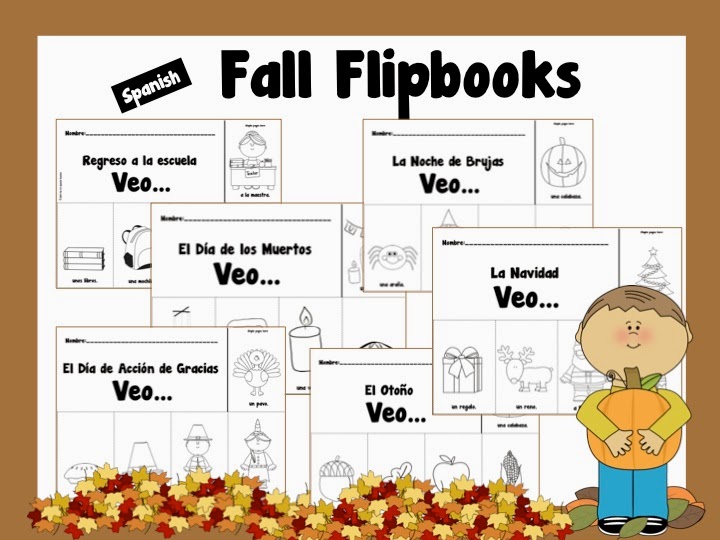
Download your free copy HERE!
$100 SHOPPING SPREE GIVEAWAY!
Last but not least! As part of the blog hop we are also hosting a big shopping spree giveaway. Two lucky teachers will win $100 worth of products from our TpT store. Just fill out the Rafflecopter to participate. ¡Buena suerte!

a Rafflecopter giveaway

Keep hopping!
Carolina

Bilingual Blog Hop!

I am so happy to be part of this amazing blog hop! Some of the most awesome teacher have teamed up to make this happen.

Make sure to mark your calendars!

See you soon!
Carolina